

In today’s competitive business world, setting effective goals for your sales team is crucial for success. By carefully defining specific, measurable objectives, you can motivate your team and drive productivity. Encouraging collaboration, celebrating achievements, and providing regular feedback are just a few strategies that can help your sales team reach their full potential. Remember, by setting clear goals and supporting your team every step of the way, you can create a cohesive and successful sales team. Are you looking for ways to boost your sales team’s performance and motivation? Setting clear and achievable goals is key to driving success. In this article, we will explore effective sales team goal-setting strategies to help you maximize the potential of your team and achieve outstanding results. Let’s dive in!
Why Goal Setting is Important for Sales Teams
Setting goals is essential for sales teams as it provides direction, motivation, and a clear path to success. When your team members have specific and measurable objectives to work towards, they are more likely to stay focused, driven, and engaged.
Goal Setting Increases Motivation
Setting goals gives your sales team something to strive for and helps them stay motivated. When individuals have a clear target in mind, they are more likely to put in the effort and go the extra mile to achieve it. This can lead to increased productivity and improved performance.
Goals Provide Direction
Having well-defined goals provides your sales team with a roadmap for success. It helps them prioritize their tasks, stay on track, and focus on the activities that will drive results. Clear goals also make it easier for team members to make decisions and align their efforts towards a common objective.
Setting SMART Goals for Your Sales Team
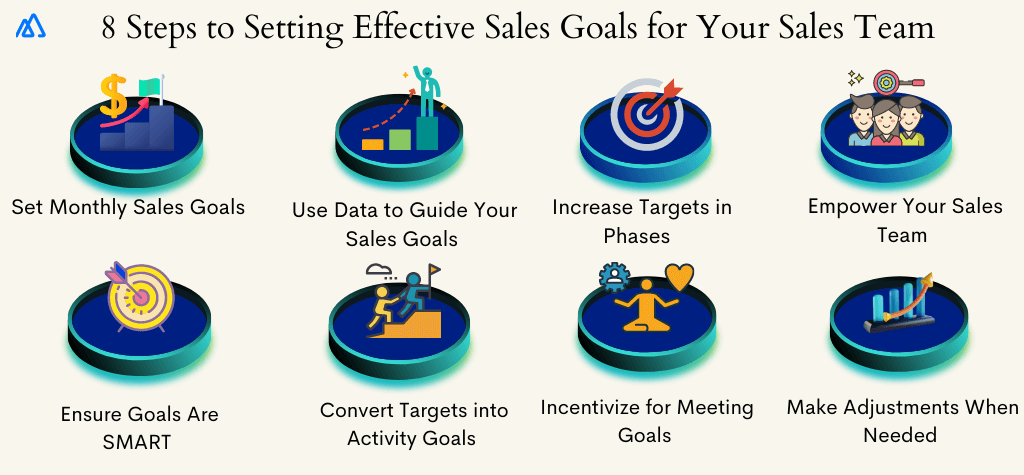
When setting goals for your sales team, it’s essential to follow the SMART criteria. SMART goals are Specific, Measurable, Achievable, Relevant, and Time-bound. This framework ensures that your goals are clear, actionable, and focused on driving performance.
Specific
Start by defining specific objectives that outline exactly what needs to be achieved. Avoid vague goals like “increase sales,” and instead, set specific targets such as “increase monthly sales by 20%.”
Measurable
Goals should be measurable so that progress can be tracked and evaluated. Use key performance indicators (KPIs) such as revenue generated, leads qualified, or conversion rates to measure success.
Achievable
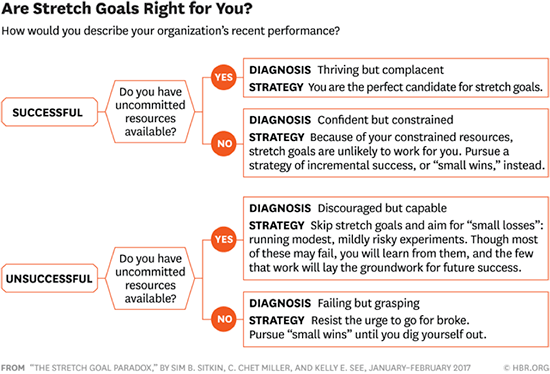
Goals should be challenging yet attainable. Setting unrealistic targets can demotivate your sales team, while setting achievable goals can boost confidence and drive performance.
Relevant
Goals should be relevant to your team’s overall objectives and contribute to the success of your business. Align sales goals with broader company goals to ensure everyone is working towards the same vision.
Time-bound
Set deadlines for achieving goals to create a sense of urgency and accountability. Time-bound goals help your team stay focused, prioritize tasks, and maintain momentum towards success.
Establishing Team and Individual Goals
In addition to setting overall sales team goals, it’s also important to establish individual goals for each team member. Individual goals help align personal objectives with team objectives and create a sense of ownership and accountability.
Team Goals
Team goals are overarching objectives that the entire sales team works towards collectively. These goals should be aligned with the company’s vision, mission, and strategic priorities. Examples of team goals include achieving a revenue target, increasing customer retention rates, or launching a new product successfully.
Individual Goals
Individual goals are specific targets assigned to each team member based on their role, skills, and performance. These goals should be aligned with team goals and designed to support overall sales objectives. Individual goals can include targets such as closing a certain number of deals, improving lead conversion rates, or enhancing product knowledge.
Tracking Progress and Celebrating Achievements
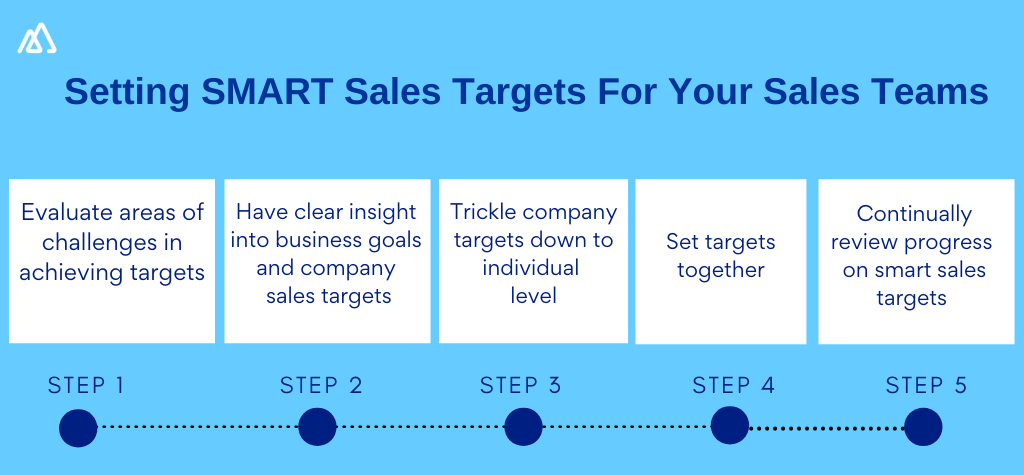
Once you have established SMART goals for your sales team, it’s essential to track progress regularly and provide feedback to team members. Tracking progress allows you to identify areas of improvement, recognize top performers, and address any challenges or obstacles that may arise.
Regular Check-ins
Schedule regular check-in meetings with your sales team to review progress towards goals, discuss achievements, and address any issues or concerns. These meetings provide an opportunity to provide feedback, offer support, and ensure that everyone is on track to meet their objectives.
Performance Reviews
Conduct periodic performance reviews to assess individual and team performance against goals. Provide constructive feedback, recognize achievements, and identify areas for improvement. Performance reviews help motivate your team, track progress, and drive continuous improvement.
Celebrate Achievements
Celebrate milestones, achievements, and successes with your sales team to boost morale and motivation. Recognize top performers, reward accomplishments, and create a positive and supportive work environment. Celebrating achievements reinforces the importance of goal setting and encourages a culture of excellence within your team.
Motivating Your Sales Team to Achieve Goals
Motivation is a key driver of sales team performance and success. As a sales leader, it’s essential to inspire and motivate your team to achieve their goals and exceed expectations.
Provide Incentives
Incentives such as bonuses, commissions, or rewards can motivate your sales team to push harder and achieve their goals. Create a rewards system that recognizes and compensates top performers, incentivizes goal attainment, and reinforces a culture of excellence.
Offer Training and Development Opportunities
Invest in training and development programs to help your sales team acquire new skills, enhance their performance, and achieve their goals. Provide opportunities for ongoing learning, coaching, and mentorship to support professional growth and development.
Foster a Positive Work Environment
Create a positive and supportive work environment that encourages collaboration, teamwork, and mutual respect. Build strong relationships with your team members, foster open communication, and create a culture of trust and transparency. A positive work environment promotes motivation, engagement, and teamwork.
Evaluating and Adjusting Goals as Needed
Goal setting is an ongoing process that requires evaluation, adjustment, and refinement. It’s important to regularly review and assess your sales team goals to ensure they remain relevant, achievable, and aligned with your business objectives.
Measure Progress
Track and measure progress towards goals using key performance indicators and metrics. Monitor sales performance, revenue targets, and other relevant data to assess how your team is performing against objectives. Regularly review progress to identify trends, patterns, and areas for improvement.
Evaluate Results
Evaluate the results of your sales team goals to determine what worked well and what needs improvement. Analyze performance data, identify successes and challenges, and gather feedback from team members to gain insights into goal achievement. Use this information to inform future goal setting and strategy development.
Adjust Goals as Needed
Be flexible and willing to adjust goals as needed based on changing market conditions, business priorities, or unforeseen circumstances. If goals are no longer relevant or achievable, consider revising them to ensure they remain challenging yet attainable. Regularly review and adjust goals to keep your sales team focused, motivated, and on track towards success.
Conclusion
Effective goal setting is essential for driving sales team performance, motivation, and success. By setting SMART goals, establishing team and individual objectives, tracking progress, and motivating your team, you can create a culture of excellence and achieve outstanding results. Remember to evaluate and adjust goals as needed to ensure they remain relevant, achievable, and aligned with your business objectives. With the right strategies in place, your sales team can reach new heights and exceed expectations. Good luck!